Of course. Let's delve into the psyche of style. We're not just changing an accessory; we're shifting your entire narrative presence for the day. Here is the transformation.
Crafting Your Character: A Guide to the Scarf's Seven Narrative Identities
Consider your wardrobe a library of potential selves, and you, its sole protagonist. Yet, how often do we pull the same character from the shelf each morning? The scarf is your narrative catalyst—a single, potent element that can instantly recalibrate the emotional tone of your entire presence. The magic isn't in the intricacy of the knot, but in the story you choose to inhabit. Below, we unlock seven distinct archetypes, each accessible through the conscious selection of a single textile.
1. The Parisian Purist
- The Textile Talisman: A flawless square of silk twill, approximately 70-90cm. Its power is not in pattern, but in a single, resonant note of color—a potent crimson, an abyssal navy, a stark black. The material must be impeccable, its quality speaking for itself.
- The Inner World: This identity is a masterclass in intentionality. She operates from a place of supreme confidence, where every choice is deliberate and nothing is extraneous. Her sophistication is broadcast through elegant restraint. This scarf is not a mere flourish; it is the final, decisive period on a perfectly composed statement.
- Bringing the Character to Life: Secure the silk with a simple, crisp knot at the neck. Anchor it amidst a uniform of enduring classics: a marinière sweater, a perfectly cut trench coat, tailored trousers, and unadorned leather flats. It is the sole jewel required, a declaration that you have arrived, complete.
2. The Creative Maverick
- The Textile Talisman: A glorious, engulfing textile that prizes volume and emotional impact. Seek out chaotic, abstract expressionism on wool, cashmere, or modal—think bold splashes of paint, energetic brushwork, or a collision of geometric forms. The more audacious, the more authentic.
- The Inner World: Here lives the untethered spirit who places creative impulse and personal truth above all sartorial doctrine. This scarf is her wearable canvas, an external manifestation of a vibrant, untamed inner world. It isn't about matching; it's about a profound sense of rightness.
- Bringing the Character to Life: The goal is studied nonchalance. Allow it to drape, to wrap, to cascade asymmetrically, as if tossed on in a moment of inspiration (even if the artistry took ten minutes). Juxtapose it against layers of competing textures—a worn denim jacket thrown over a slip dress—for a look of pure, unadulterated expressive joy.
3. The Pastoral Scholar
- The Textile Talisman: A textile steeped in heritage. The pattern is paramount—a traditional tartan, a classic houndstooth, or a subtle glen plaid—rendered in a palette drawn from the natural world: moss, peat, burnt umber, and faded heather. Its substance is found in comforting, tactile materials like merino, lambswool, or a soft tweed.
- The Inner World: This archetype is defined by a sense of being grounded. They find comfort in tradition, substance, and the quiet wisdom of the natural world. This scarf evokes the atmosphere of a worn leather armchair, a crackling fire, and the scent of old books.
- Bringing the Character to Life: Tuck the scarf neatly into the collar of a chunky Aran sweater or a waxed field jacket. This character is completed by corduroys, sturdy leather boots, and perhaps a legacy timepiece. The entire composition speaks of durability, intellectual comfort, and understated intelligence.
4. The Global Sojourner
- The Textile Talisman: An ethereal wisp of fabric, often gossamer-light and semi-transparent. It tells its story through intricate block prints, ancient paisley motifs, or organic tie-dye patterns. Look for talismanic touches like tassels, delicate embroidery, or raw, frayed edges.
- The Inner World: Curiosity and a touch of the mystic fuel the Sojourner. Their style is a collage of global inspirations, a narrative of journeys taken and cultures embraced. The scarf functions as a wearable passport, a memento of an experience, whether real or simply yearned for.
- Bringing the Character to Life: The essence here is graceful movement. Wear it unbound as a head covering, tie it to the weathered strap of a leather satchel, or let it billow over the landscape of a flowing maxi dress. The aesthetic is one of beautiful ease.
5. The Boardroom Architect
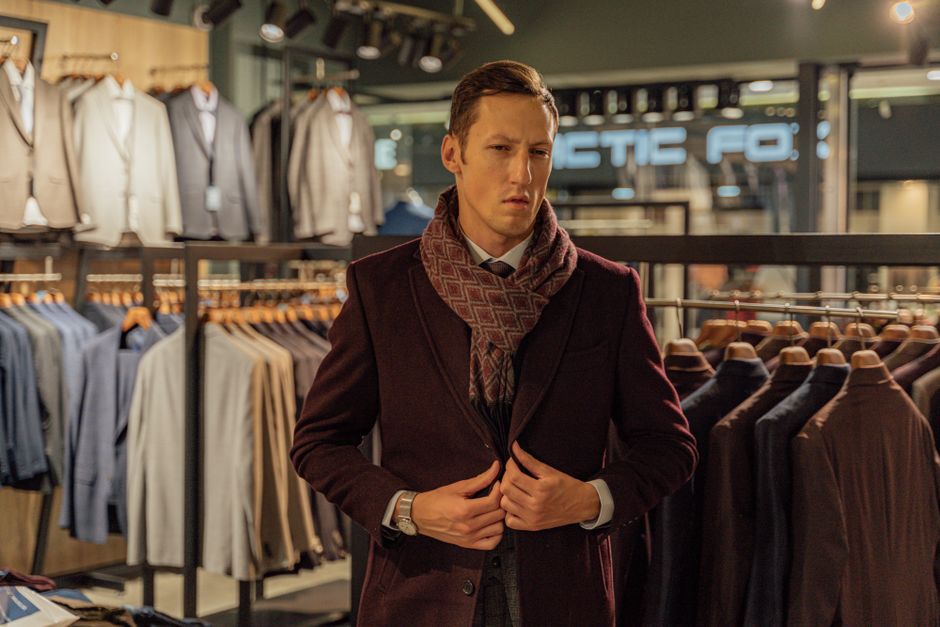
- The Textile Talisman: A sleek blade of silk, long and rectangular (often a 'twilly' or 'gavroche'). The pattern is a testament to order and precision: sharp geometric repeats, architectural lines, or a sophisticated logomark. The palette is authoritative and controlled, favoring shades of oxblood, forest green, and steely grey.
- The Inner World: This is the mindset of ambition, polish, and strategic command. The scarf is a tool of soft power, its clean form and rigorous pattern reflecting a focused, organized intellect. It is a subtle, yet unmistakable, signal of authority.
- Bringing the Character to Life: Execute with surgical precision. Knot it in a clean, elongated style that echoes a necktie, or drape it with flawless symmetry over the lapels of a tailored blazer. The scarf must integrate seamlessly into the power suit, enhancing its message rather than creating a distraction.
6. The Nostalgic Dreamer
- The Textile Talisman: A whisper of chiffon or time-softened silk, usually a small, delicate square. The print is a portal to another time: ghostly florals, whimsical polka dots, or sinuous Art Nouveau tendrils. Its colors are muted, as if viewed through the soft focus of memory.
- The Inner World: This soul is a romantic, deeply connected to the poetics of the past and adept at finding beauty in overlooked details. The style is imbued with grace, gentle femininity, and sentimentality. This scarf is a quiet ode to a bygone era.
- Bringing the Character to Life: Its power lies in its unexpected placement. Avert the neck entirely. Instead, tie it with a soft bow around your wrist, loop it through the handle of a structured handbag, or use it to bind your hair. It becomes a poetic, deeply personal gesture.
7. The Urban Visionary
- The Textile Talisman: A piece defined not by tradition, but by innovation. Its identity is forged in its very materiality—technical fabrics, weaves of metallic fiber, or stark, graphic monochrome prints. The pattern might be pixelated, digitally rendered, or inspired by brutalist architecture.
- The Inner World: This archetype is an innovator, drawn to the cutting edge of design and technology. They dress for the world they're building, not the one they're in. Unafraid of experimentation, they see their scarf as a piece of modern art or wearable technology.
- Bringing the Character to Life: Styling must be a deliberate, graphic gesture. Wound taut like a choker, it's a statement of intent. Draped with sharp, angular lines over a minimalist, monochromatic ensemble, it becomes a piece of personal architecture. This scarf is a fragment of the future, worn today.
Of course. As a stylist who believes that our closets are a direct line to our psyche, I understand that what we wear is less about fashion and more about feeling. Here is a reimagining of the text, infused with the principles of sartorial psychology.
The Scarf as an Emotional Visa, Not Just a Wardrobe Staple
Viewing your accessories through the lens of archetypes initiates a profound paradigm shift. The conversation in your mind moves from a superficial question—"Does this match?"—to a much deeper inquiry: "What identity am I embodying at this moment?" This is the art of intentional self-expression. Your scarf is no longer a simple piece of fabric; it becomes an emotional visa, granting you access to entirely new mindsets and internal landscapes.
Consider the difference. A crisp, heritage tartan can anchor you in a state of intellectual rigor, preparing you for a session of focused work. In contrast, a scarf swirling with an abstract, energetic pattern can unleash your inner innovator, giving you the implicit permission to embrace spontaneity. This is the foundational principle of dressing with intention: leveraging your wardrobe to consciously shape your feelings and guide your actions.
At its heart, this philosophy champions a deeply sustainable mindset. You sidestep the relentless pursuit of ephemeral fads and instead commit to building an intentional archive of identities. A single scarf of exceptional quality possesses the power to animate a dozen different outfits you already own, infusing your existing garments with fresh purpose and storytelling potential. The focus here is on narrative depth, not sartorial breadth. You might discover that your Corporate Strategist persona, to truly broadcast her authority, finds her full expression when her blazer is amplified by the architectural gravitas of a structured tote from a recent collection. The objective isn't merely to assemble an outfit; it's to sculpt a complete, believable persona from head to toe.
Ultimately, this practice is a masterclass in refining your sartorial instincts. Garments cease to be disconnected objects and instead become crucial narrative elements. Think of the scarf as the emotional keynote for your entire ensemble; it establishes the psychic vibration for the day. When you drape yourself in the delicate florals of your Vintage Romantic scarf, your hands will instinctively reach for softer fabrics and perhaps the whisper of heirloom-inspired jewelry to complete that narrative. This is a process guided by feeling, not by rules. When you master the archetype accessory, you transcend the mundane act of putting on clothes. You become the deliberate author of your day's story, with every choice a conscious plot point.