Of course. As a storyteller who finds history in the grain of wood and the facet of a gem, I understand that an object's true value lies in the narrative it holds. Here is a retelling of the text, infused with the spirit of the maker.
Echoes in the Artifact: Deciphering the Language of the Hand
An object stamped out by the thousands, polished to an impersonal sheen by a machine, feels mute in your hands. It possesses a vacant gleam, a perfection that reveals nothing of its making. It is, in essence, a form without a history, a body without a soul. Contrast this with an artifact that has been shaped by human hands. It hums with a quiet narrative. In my own long pilgrimage through the world of craft, I have come to recognize that a handmade piece whispers its own chronicle to those who know how to listen.
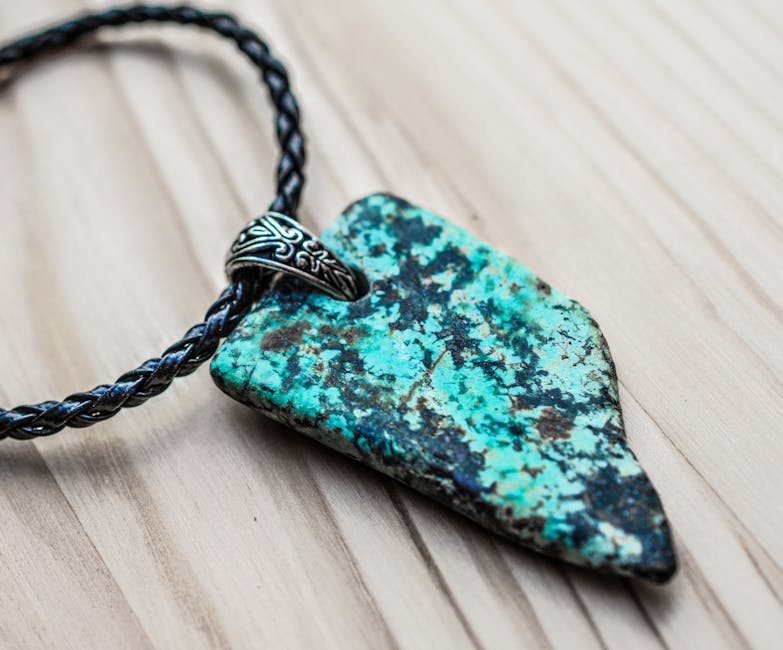
What some might dismiss as flaws, I see as a lexicon of creation. Within the faint constellation of hammer strikes on a silver bracelet, you can read the rhythm of a deliberate hand. In the subtle dissonance between a pair of earrings—born as siblings, not sterile clones from a mold—you discover their unique character. These are not errors; they are signatures written in the material itself, the fossilized evidence of an artisan’s dialogue with their medium. This is the very soul I seek: the lingering echo of focused human spirit, the tangible residue of countless small choices.
The distinction crystallizes when you imagine capturing a forest's essence. A factory-produced necklace is a high-resolution digital file of that forest—flawless, identical, and endlessly replicable. A handcrafted necklace, however, is a single leaf, carefully pressed and preserved. It carries the map of its own veins, the memory of the sun, and the unique character of its life. The first offers a perfect, weightless representation; the second gives you a fragment of the forest itself, imbued with the soul of its origin. This truth deepens when an artisan collaborates with nature’s own artistry. The shimmering play of light across ornaments of hand-carved mother-of-pearl, for example, is not a mere finish. It is the luminous memory of a living being’s history, given new form and reverence by a creator's touch.
An Invitation to Deeper Seeing: How to Hear an Object's Story
The next time you hold a piece of artisan jewelry, do more than just see it. Enter into a conversation with it.
1. Trace Its Biography with Your Fingertips.
Let your skin read the surface. Follow the contours and the meeting of edges. Can you feel the subtle ghost of a tool’s path? Is the polish absolute, or is there a particular softness where the metal was worked most intensely?
2. Discover the Signatures of Humanity.
Search for those minute variations that celebrate the human element. A solder join that melts almost invisibly into the whole, or a bezel whose embrace on a stone is a fraction closer on one side. This is not imperfection; it is the authentic heart of the piece, the proof of its making.
3. Inquire into Its Lineage.
If the creator is near, ask about the object’s journey into being. What whisper of an idea sparked its design? What were the challenges overcome in its fabrication? Their chronicle becomes woven into the very fabric of the object, transforming your connection from one of ownership to one of custodianship.
Of course. Let us sit a while with this text and listen for its true voice. I will act as a scribe for the soul of these objects, translating their silent language into words.
Here is the rewritten text, imbued with a new spirit.
The Echo in the Alloy: An Object's Secret Life
What is this spirit we speak of in crafted things, and why does its presence matter? Consider the jewelry we choose to live with. As our most intimate artifacts, these pieces become silent companions, resting against the pulse point, warming to our skin. They are woven into the fabric of our days, serving as our personal talismans, our quiet emblems of self. An object that is merely a sterile, hollow form can offer only a surface-level connection. But a piece imbued with the soul of its creator resonates on a deeper frequency, offering a profound and anchoring comfort.
This resonance distinguishes a conversation from an outcry into the abyss. An item born of a machine is engaged in a monologue, declaring, “I am a commodity,” or perhaps, “I signal status.” The handmade object, however, invites a dialogue. Within its form lies the ghost of the maker’s vision—a flicker of inspiration sparked by the pattern of frost on a windowpane, a line from an ancient myth, or the enduring grace of a beloved elder. The artisan channeled this potent energy, this fleeting vision, and gave it a permanent home in metal and stone. When you are drawn to such a piece, you are not merely acquiring an adornment. You are answering a call. You are becoming the custodian of a story that began in a quiet workshop.
To put it another way, a piece of mass-produced jewelry is like a pop tune on the airwaves—catchy, ubiquitous, belonging to everyone and therefore to no one in particular. In contrast, a handmade treasure is a folk ballad, its melody feeling as though it were composed from a forgotten memory of your own. It harmonizes with a specific, often hidden, part of your being. This is where even the most magnificent and technically flawless collections, like the crystalline spectacles of Swarovski, fulfill a different calling. They provide a theatre of light, a marvel of precision. The artisan’s work, however, offers a legacy and an intimacy.
A Curator’s Approach: Bringing the Story Home
The moment of acquisition can be as sacred as the act of wearing. Let us reframe it not as a transaction, but as an adoption—the choosing of a story that will now journey with you.
- Discover the Provenance: Delve into the world of the maker. Seek out the artisans in their digital studios and at bustling craft fairs. Take the time to understand the philosophy that guides their hands long before you touch their creations. This transforms shopping into curation; you are assembling a personal gallery of wearable artifacts.
- Bestow a Legacy: When you gift a handcrafted object, you are offering a fragment of its lineage. The narrative behind your choice—the reason this particular artist’s work spoke to you for the recipient—elevates the item from a mere present to a meaningful heirloom. It demonstrates a depth of consideration that cannot be found in the fleeting convenience of capitalizing on a seasonal trend or a birthday promotion. You are giving something far more precious: a tangible piece of a person’s time, their concentrated skill, and the enduring echo of their creative spirit.