Of course. Here is the rewritten text, infused with the persona of a fashion historian and cultural trend analyst.
The Sartorial Telegraph: Decoding the 1970s Scarf
To truly decipher the 1970s zeitgeist, one must peer beyond the familiar silhouettes of flared trousers and towering platforms to analyze the era’s semiotic currency. Within this visual lexicon, a simple length of fabric—the scarf—functioned as the decade’s most potent telegraph. It was a sartorial signaling device, broadcasting complex tribal allegiances across a pulsating discotheque or a fervent protest march. The specific textile, iconography, and knot became a declaration of one’s cultural citizenship, articulating a worldview long before any verbal introduction. This was not mere adornment; it was the active projection of a carefully constructed identity.
The Counterculture Credo: Earth Tones and Eastern Philosophies
The most pervasive signal emanating from the youth movement was the scarf reimagined as a headband, worn low against the brow. This was far more than a practical bohemian flourish. It served as the de facto insignia of the counterculture, and the textile’s provenance was paramount. A polemic against the slick, synthetic futurism of the preceding decade, these fabrics were deliberately organic: earthy cottons, distinguished by the rustic imperfections of Indian block prints, the fluid intricacies of paisley, or the psychedelic blooms of tie-dye. Such patterns articulated an allegiance to a burgeoning spiritual consciousness, a nascent environmentalism, and a romanticized back-to-the-land ethos. To wear a paisley scarf in this manner was to engage in a quiet act of dissent against rampant consumerism and the military-industrial complex. Its message was clear: an alignment with the pastoral idealism of Laurel Canyon over the rigid capitalism of Wall Street. This tradition of headwear as a statement endures, its non-conformist spirit constantly reinterpreted through contemporary cultural filters.
The Urban Nocturne: Glamour as Subversion
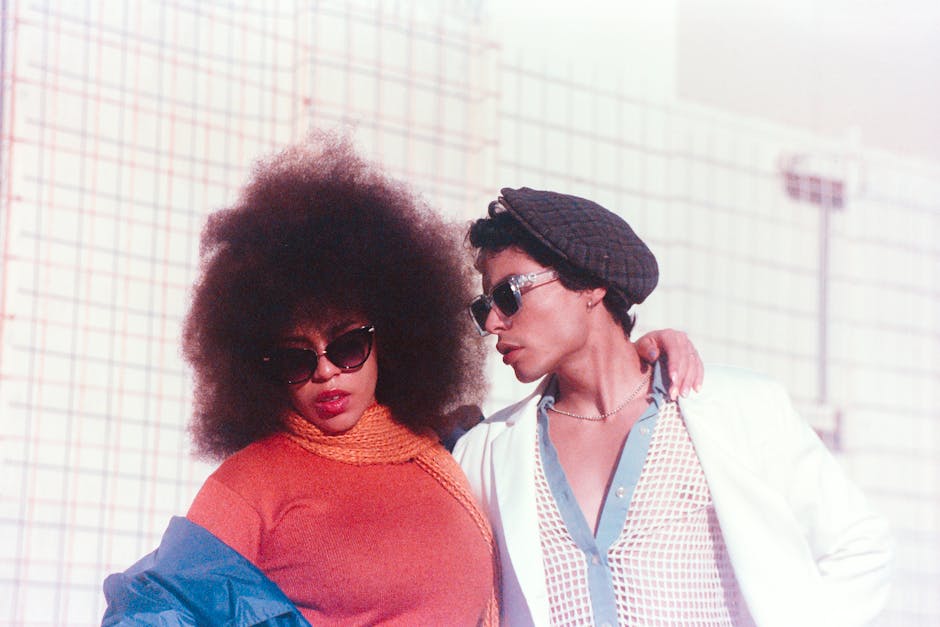
Simultaneously, a radically different dialect emerged from the dimly lit, hedonistic enclaves of the metropolis. The intertwined scenes of disco and glam rock appropriated the scarf as a tool for a new kind of rebellion. Here, the materials were a celebration of the sensual and the defiantly artificial—shimmering Lurex that caught the strobing lights, satin with a liquid drape, and predatory animal prints. Icons like David Bowie and Marc Bolan, alongside the regulars of Studio 54, favored skinny scarves knotted loosely at the throat, like a fluid, deconstructed cravat. This was a direct affront to staid, traditional masculinity. The slinky, androgynous accessory announced an embrace of ambiguity, artistic expression, and uninhibited pleasure. Knotted beneath an unbuttoned shirt, a leopard-print scarf was not for insulation; it was the badge of a nocturnal tribe that wielded glamour and excess as its primary weapons of cultural insurgency.
The Insignia of the Elite: Silk, Status, and Stability
While subcultures weaponized the scarf for dissent, the entrenched elite employed it to reinforce the status quo. For the haute bourgeoisie, the classic silk square from houses like Hermès or Gucci was the ultimate signifier of dynastic wealth and conservative principles. Its placement was a study in precision, whether tied in an impeccable knot at the side of the neck or looped with calculated elegance through the handles of a heritage handbag. The iconography was controlled and emblematic of privilege: equestrian motifs, nautical chains, and crisp, geometric monograms. This was the scarf as a quiet assertion of an unwavering social hierarchy. It communicated a world of inherited position, transatlantic voyages, and immutable traditions. Its message—one of order, legacy, and stability—stood in stark opposition to the expressive, often chaotic signals telegraphed by the decade's ascendant youth cultures.
Here is the rewritten text, delivered in the persona of a fashion historian and cultural trend analyst.
Woven Narratives: The Enduring Semiotics of the 1970s Scarf
The sartorial echoes of the 1970s reverberate with surprising force in our contemporary moment. Far from a sepia-toned relic, the humble foulard of that era established a cultural blueprint for accessory-as-identity that we still follow today. Consider it a tangible, analog precursor to the digital profile. In a world before the internet, a simple length of fabric functioned as a potent signifier, telegraphing one’s affiliation with specific cultural, political, or musical movements. It was a physical medium for broadcasting a personal ethos and discovering one's subcultural kin. While the platforms have digitized, the fundamental human impulse to articulate identity through adornment has not waned; it has merely migrated.
In the current zeitgeist, this tribal signaling manifests through the specific drop of a sneaker, the ideology emblazoned on a canvas tote, or the discreet logo on a cashmere beanie. The underlying message remains unchanged, yet the dialect has shifted. What differentiates the 70s approach is its sophisticated, less commercially saturated vocabulary. The meaning was woven directly into the textile's very essence—its materiality, its pattern—not merely stamped on by a corporate marque. This stands in stark contrast to the overt logo-mania that defined later eras, such as the Y2K obsession with the Fendi 'Baguette' or the ubiquity of the Von Dutch trucker cap, where the brand itself was the entire message. The 70s scarf, however, demanded a higher degree of cultural literacy to properly interpret its coded language.
To examine this history, therefore, is not a simple exercise in nostalgia. It is to engage with a vital case study in the art of nuanced self-expression. It reveals a profound truth: the most understated elements of an ensemble can often articulate the most powerful statements, offering a lesson in creating an authentic style that resonates with intention.
A Lexicon for Intentional Adornment
For those looking to harness this potent legacy—whether with a vintage treasure or a contemporary design—a tripartite framework can be your guide: Materiality, Motif, and Method of Wear. Before knotting a piece of fabric, one must first ask: what narrative am I weaving?
1. Materiality: The Foundation of Your Narrative. Does your chosen fabric speak of earthy authenticity or cosmopolitan polish? A raw, nubby cotton communicates a vastly different set of values than a lustrous, fluid silk. One conjures the spirit of a bohemian folk revivalist; the other, a discotheque sophisticate.
2. Motif: The Dialect of Your Allegiance. Is your visual language one of rebellion or of heritage? A chaotic, psychedelic tie-dye or a subversive paisley communicates a counter-cultural leaning, while disciplined geometrics or classic equestrian themes align with a more traditional aesthetic. The pattern is your chosen dialect within the broader language of style.
3. Method of Wear: The Syntactic Flourish. The final, critical component is placement. Worn as a headband, a scarf still evokes a certain free-spirited, bohemian ethos. Knotted crisply at the throat, its meaning oscillates between patrician polish and punk defiance, its interpretation wholly dependent on the other two elements. Looped through belt holes or tied to the handle of a carryall, it projects an air of calculated nonchalance, an effortless chic.
It is this deep-seated intentionality that constitutes the enduring cultural inheritance of the 1970s scarf. It serves as a timeless reminder that authentic style is never a monologue shouted through logos, but a sophisticated dialogue. Every accessory we select, from a simple textile to the intricate forms of modern statement jewelry, becomes our opening gambit in that rich, unspoken conversation.